
The Forest
The overall goal of Oak Creek Conservancy is the restoration of a 36-acre Oregon White Oak woodland through the forestry practice of “Oak release” which is an intervention where the oaks are “released” from the shade of Douglas Fir and other species of faster-growing trees that compete with the oaks, depriving them of the full sunlight they require to thrive.
Historically, for as long as 6,000 years before white settlers, the Pacific Coast Range, from Corvallis, OR to the Pacific Ocean was largely Oak Savannah and grassland thanks to the stewardship practices of indigenous Kalapuya population and other tribes who were very skilled at forest management. This included controlled, selective burning which promoted hunting and gathering of plants and animal resources that were important to the native culture. In the mid-1800’s European settlers placed limits on burning. That, and increased population and commercialization of large “tree farms,” primarily Douglas Fir for construction lumber, and aggressive prevention and control of naturally occurring forest fires resulted in a dramatic loss of oak forests to the point that today less than 5 percent of the original oak woodlands exist.
Much of the forest land now is commercially-managed tree farms primarily growing Douglas Fir, often on a 60 year cycle where trees are typically harvested by “clear cutting” areas of mature trees. This method is more cost-effective than selectively removing only a portion of trees in an area but it is obviously visually and environmentally disturbing. Logging is an important part of the Oregon economy so we look to the commercial operations to be responsible stewards of this precious resource.

Truckload heads to the mill on a foggy Oregon day with smaller dimensional logs for timber production

Visible from Oak Creek Conservancy is this 35 acre clear cut in Starker Forest commercial tree farm Corvallis OR, August, 2024. Trees removed included Douglas Fir, Noble fir and Western Red Cedar. The closeup picture shows logs lined up ready for transport to various local mills.
The key feature of Oak Release is the elimination of fast-growing non-oak species that can compete with and shade the oaks. This is harmful to the oaks which need full sun to thrive. Eventually, as competing species grow and further overtop the oak, the oaks will die.
Oak Creek Conservancy has undergone five annual phases of “Oak release” since 2012 when the first 10 acres were logged, eliminating most of the tree species that compete with Oaks, primarily Douglas fir, but including some Grand Fir, Oregon Ash, and Big Leaf Maple. Since the land had previously been periodically logged, most of the fir removed were relatively small with trunk diameters (at the small end) ranging from 4 inches to 24 inches though a small percentage were larger. Self-loading trucks brought logs to a variety of local lumber mills depending on their size. The smaller logs, less then 4”, were processed into wood chips. Logs ranging from 4” to 16” in diameter were milled into construction lumber and logs larger than 16” were processed as peeler logs for the production of plywood.
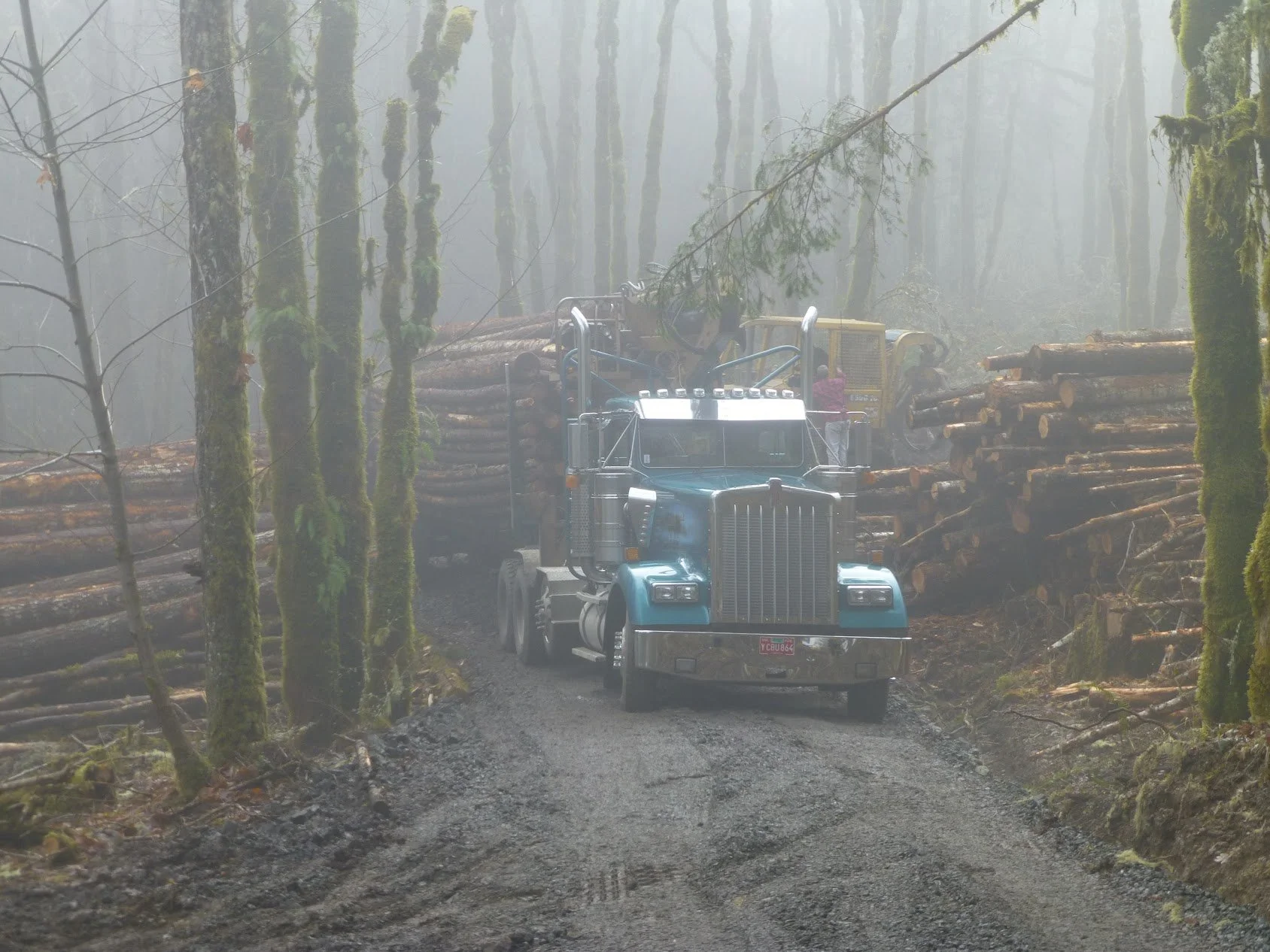

Load heading to the Sweet Home mill that can handle larger logs that will become peeler logs for plywood production.
The Oak Release was partially funded by an Environmental Quality Improvement Program (EQIP) of the Natural Resources Conservation Service, US Department of Agriculture. This grant allowed for a fixed amount of payment for forested acres of oaks “released” according to the approved prescription with the cost of logging assumed by the landowner. Under this plan the landowner maintains ownership of the harvested timber, the proceeds of which can help alleviate the cost of logging.
Most of the major logging was completed in phases between 2012 and 2016. The Conservancy is now undergoing maintenance which includes selectively removing the remaining fir trees, removing oak trees that are competing with one another and selectively transforming some of these trees into snags which serve as valuable habitat trees for a wide variety of insects, birds and animals.
The majority of the Oak Release logging,which amounted to 40 - 50 large log trucks, has been completed, and the logging that occurs now is at a smaller scale, cut primarily for firewood, or mushroom propagation logs. Some oak and fir logs were processed on the Conservancy property by a husband and wife team operating a portable saw mill for the production of building material including oak for finished lumber and furniture and including decorative live-edge thick (2”) oak slabs. Much of the lumber milled on the property has been used to finish the interior of the major residential/ event venue on the property called “The Tree House.”structure That lumber has been incorporated into the structure as oak flooring, kitchen counter tops, fireplace mantle,